‘Murder’: The disturbing story of Scotland’s greatest revolutionary
By Neil Mackay, The Herald (Scotland)
A new biography charts the life and death of the socialist firebrand John Maclean. Our Writer at Large talks to author Donald Robertson about a man as loved as he was loathed
THE state feared John Maclean so much that he was hounded, denounced, deprived of employment, blackballed, imprisoned and finally tormented to his death. One friend claimed “he was the victim of calculated political murder”.
It’s more than 100 years since the death of Maclean, a man who in his lifetime was both the most famous and infamous, loved and loathed figure in Scotland. Today, he’s fading from memory, the events of his life and the battles he fought becoming distant history, lost to many.
Maclean could count the suffragette and socialist Sylvia Pankhurst as a friend, and the British Prime Minister David Lloyd George as a sworn enemy. Vladimir Lenin described him as a “hero”.
He began life as a working-class boy in Glasgow’s Pollokshaws, but soon shook off the shackles of poverty to become an adored teacher. Eventually, he took his place among the pantheon of 20th-century Marxist revolutionaries like Lenin and Trotsky.
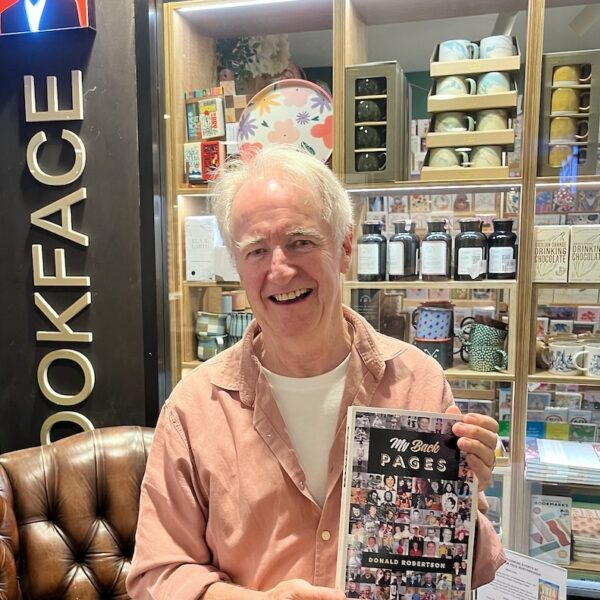
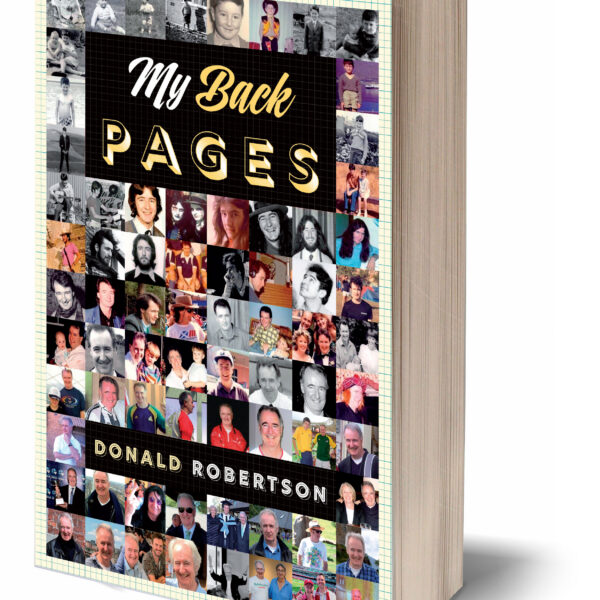
If Donald Robertson has his way, though, Maclean’s memory will never dim. His new book, Great John Maclean, is a definitive account of his life and legend. It’s both academically rigorous and a damn good read. I caught up with Robertson to hear his account of Maclean’s life.
Robertson was born in Kinlochleven in the Highlands, but his family emigrated to Australia when he was a child. Now 72, he was a music journalist and then worked for the Australian equivalent of broadcast regulator Ofcom.
He has been fascinated by Maclean since he heard the Dick Gaughan song ‘The John Maclean March’ in the 1970s. The song tells of Maclean’s release from prison after hunger strike and the tumultuous welcome which awaited him in his home city Glasgow.
After writing a number of books on the Australian music scene, Robertson decided it was time to turn his lifelong interest in Maclean into a definitive biography of the man.
This isn’t hagiography, however. It’s a warts-and-all honest account of the life and times of one of the most controversial figures in modern Scottish history. Robertson spent much time back in Scotland researching Maclean.
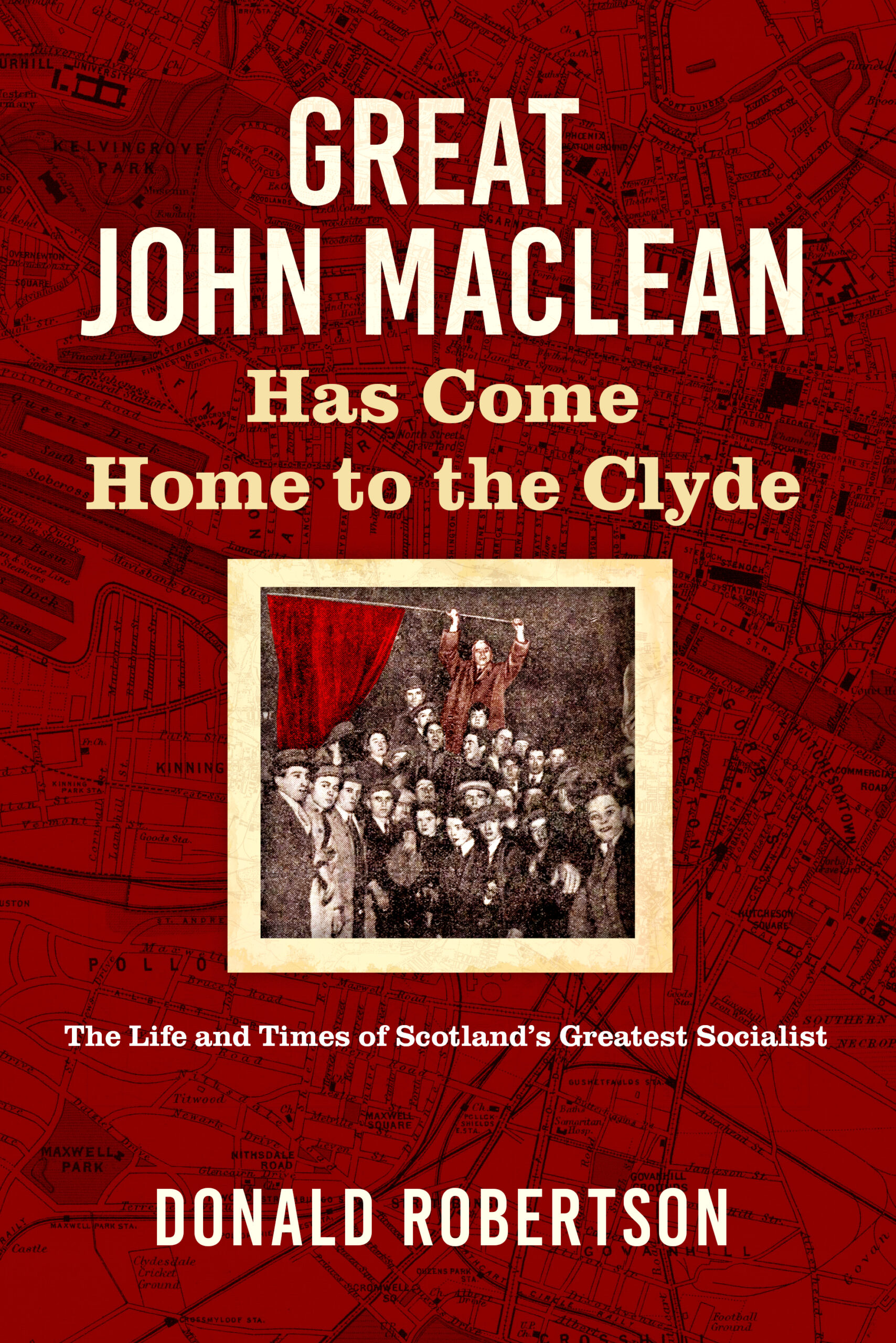 Robertson worries that too few people know about Maclean and the role he played in shaping Scotland and the politics of the left. “I wanted to tell this story,” he says. “I wanted to get it to a wider audience.”
The book deftly weaves in the history of Red Clydeside – the era of intense left-wing political activity in Glasgow in the early 20th century – as well the Russian Revolution and the First World War.
Family
As Robertson tells it, there was a certain inevitability to John Maclean turning into the nation’s most radical politician. It was in his blood and family history. His family came to Glasgow in the final wave of the Highland Clearances. His mother was a weaver, and his father a potter who died young from silicosis, or potter’s lung. Maclean was born in 1879.
His mother was determined her son would get an education, however, and Maclean worked all hours he could as a child to help his family make ends meet – taking on jobs in print works and as a golf caddy. His family was Calvinist and Maclean remained a teetotaller his entire life.
Maclean won a place at Glasgow University, where he studied for a Master of Arts. Robertson says he excelled at political economy, “but flunked Latin four times in a row. He discovered Marx and got into deep discussions with his lecturers”.
He even dared called a few of them “stupid” because of their political positions.
His political activism began as a student when he joined the Social Democratic Federation – a left-wing political party whose members included James Connolly, the Edinburgh-born revolutionary executed for his role in Ireland’s 1916 Easter Rising, and Karl Marx’s daughter Eleanor.
Robertson discovered old newspaper cuttings from contemporaries of Maclean who spoke of how it “was very unusual for a working-class boy to go to university at this time. He was looked down on by the other students, who were toffs. They gave him a hard time and teased him. It stoked the anger he felt about the way society was structured”.
He was a “very serious” student, spending his free days cycling to small towns to stage meetings “to tell the people about the joys of socialism”.
Maclean graduated in 1904 and became a teacher, mostly on Glasgow’s south side in areas like Govan and the Gorbals. One of his old schools still stands – Lorne Street Primary, not that far from the banks of the Clyde.
The children he taught came from working-class families like his own. Their fathers worked in shipyards and heavy industry. “Many were poor, shabbily dressed and hungry,” says Robertson.
Maclean’s talent for rhetoric soon saw him much in demand as a public speaker at socialist meetings. In the school holidays, he got back on his bike to take his political message around the country.
During one trip to Hawick in the Borders, he lodged with a Christian socialist family and fell in love with their niece Agnes. She eventually came to Glasgow to train as a nurse. They married in 1909 and had two daughters.
Maclean was soon involved with industrial action around Scotland, gathering support for trade unionists on strike at the Singer sewing machine factory in 1911, and travelling to South Wales to support miners.
War
THE next year, 1912, the Socialist International declared its opposition to war as Europe moved closer to mass conflict. That meant all affiliated socialist parties took an anti-war stance, something Maclean passionately supported.
The view was, says Robertson, “that this was a war for markets – a capitalist war, where the working classes of the allies would be pitted against the working classes of the central powers”.
However, as war broke out, many of the European socialist parties “changed their minds and saluted the flag, including the Labour Party and the French Socialist Party”.
Maclean stood on the other side of the divide with the likes of Lenin, Trotsky, and the German revolutionary Rosa Luxemburg, one of the leaders of the Spartacist Uprising in Berlin after the First World War who was later assassinated by the far-right paramilitary group the Freikorps.
With war under way, Maclean began a series of regular Sunday night public meetings in Glasgow. Attending his speeches became a must for left-wing Glaswegians, as well as those who opposed him. “He would speak for hours,” says Robertson. Public speeches by figures like Maclean were the equivalent to today’s TV or radio talkshows.
Maclean had to be “careful what he said”, though, as the government had passed the Defence of the Realm Act, which made it an offence to say anything which might damage the war effort. Comments deemed to “cause disaffection among munitions workers” could land someone in jail – as Maclean was soon to discover.
Maclean and other left-wing anti-war figures staged their speeches at a building in the city centre directly opposite the headquarters of Glasgow Trams, which was run, says Robertson, “by a red-hot patriot. There were enlistment posters in the tramway windows”.
When Maclean spoke to a packed house, there were “scuffles” with pro-war groups who “tried to break up the meetings and cause disturbances. But when that started, more and more people came who were sympathetic to Maclean”.
It wasn’t just mob violence or the threat of prosecution which meant Maclean had to be careful over what he said – he was also a teacher and his career could suffer if he crossed a line.
His first arrest came in 1915, a year into the war. He was speaking outside Langside Hall on Glasgow’s south side – a popular venue for hustings. “There were a number of soldiers in the crowd,” says Robertson. “The pubs had just closed, so some of the soldiers were a bit worse for drink.”
At one point, Maclean referred to the war as “this murder business”. One of the soldiers got angry and asked if Maclean was calling him a murderer. Maclean said he wasn’t – he was calling the politicians sending soldiers to war murderers.
Arrest
A ROW broke out and the police arrested Maclean. A free speech committee was set up in Glasgow as a result and up to 2,000 people demonstrated in his support.
He would eventually be imprisoned five times. His first offence under the Defence of the Realm Act was for making “statements likely to prejudice recruiting”. During the trial, he said: “I have enlisted in the Socialist army for 15 years. God damn all other armies.”
Maclean was treated with relativity leniency for his first offence and given the choice of a week in prison or a £5 fine. He chose prison. The sentence was greeted by his supporters with shouts of “Three Cheers for Maclean! Three cheers for the Revolution!”.
“Officials and the police were horrified to hear the strains of ‘The Red Flag’ rising in the sacred precincts of the court,” Robertson says.
Maclean had by this time set up the socialist newspaper Vanguard in Glasgow and was still spending his weekends proselytising to workers “on the fundamentals of Marxism”.
Fearing that his paper and his recruitment drives would collapse if he was jailed, he sought the help of other revolutionaries to step into the breach in the event of his imprisonment.
One man he turned to was the Russian communist emigre Peter Petroff, who was based in London. Petroff connected Maclean to a whole web of European revolutionaries through the Russian diaspora including Lenin and Trotsky.
Robertson says that Petroff’s diaries describe “Maclean’s home as a hive of activity”. Petroff wrote about Maclean talking to workers at factory gates, chalking details of upcoming socialist meetings on pavements so people knew where to go, and visiting trade unionists all around Clydeside.
Trade unions involved in munitions work were opposed to government plans to speed up production by bringing in unskilled workers.
Robertson notes that papers like The Herald were “straight up and down” in the reporting of Maclean’s trial, putting no establishment spin on the events.
Maclean was already controversial among the great and the good who ran Glasgow’s school system, however. So arrest and imprisonment was far from helpful to his career. His imprisonment elevated him to the position of a “prominent pubic figure” and became “huge news” across Scotland.
He had risen to be a deputy headmaster. He was beloved by pupils who called him “Daddy Maclean”. His last boss, however, a headmaster named Hugh Fulton, did not hold the same affection for him. And the feeling was mutual.
Prior to his first jail sentence, Maclean was in a long-running dispute with Fulton. The headmaster was accused of bullying staff. “Maclean stood up for the staff and the two were at loggerheads. Maclean was never one to back down,” Robertson says.
Sacked
FOLLOWING his release from prison in late 1915, and with the dispute between the two still running, Maclean was dismissed from his job. It was a turbulent period in Glasgow. At the same time as Maclean’s arrest and imprisonment, Mary Barbour – one of his friends – was leading the famous rent strikes in the city.
Maclean had learned of his dismissal the night before the striking tenants were to be taken to court. On his last day teaching, demonstrators supporting the rent strikers marched by his school. They called on Maclean to join them, and he walked out of school never to return, marching with them to protest outside the court.
“His salary was paid up to the following February. He no longer has to teach. So he’s free to launch full tilt into agitation against the war with public meetings,” Robertson explains.
Undercover police are now in regular attendance at his public speaking events. Lloyd George, then minister of munitions, came to Glasgow to try to iron out problems with the Clyde Workers Committee, which was resisting changes to conditions in armament factories.
He was booed and heckled at a public meeting and had to “scurry” away, says Robertson. The government had issued a D-Notice saying that only “an official account of the meeting could be published”.
An issue of the socialist newspaper Forward carried an “accurate account” of Lloyd George’s reception. Police seized all copies and the paper’s presses. “Even subscribers’ houses were visited to track down copies that had been distributed,” Robertson explains.
Unprinted proofs of Maclean’s Vanguard newspaper were also seized under the Defence of the Realm Act “and suppressed by the police on military authority”.
Vanguard’s unpublished article on the Lloyd George meeting said that the crowd “laughed cynically and irreverently” at him.
“Seldom has a leading representative of the governing class been treated with so little respect by a meeting of workers,” it added.
Robertson said: “After the treatment Lloyd George got, any sense of forbearance towards Maclean and the leaders of the Clyde Workers Committee was gone. The government was out to get them.”
Sedition
MACLEAN was arrested again in early 1916 and taken to Edinburgh Castle. He faced a charge of sedition and was offered a court martial or civil trial. He chose a civil trial and was sentenced to three years hard labour. The trial happened just before the Easter Rising in Dublin.
Police who had been undercover at his meetings were used as witnesses. None of their notes of what he said were taken contemporaneously, but compiled later.
“All of their notes bore a striking resemblance to each other,” Robertson adds. “It was a stitch-up.”
One comment used to convict Maclean was a reference he made to the famous Christmas truce on the western front. He made a comment that “if British troops laid down their arms, Germans would too. They twisted that into him saying we should give up”, Robertson explains. “They wanted to put him away for what he was saying.”
Some members of the Clyde Workers Committee also targeted by the authorities were “offered the option of expulsion from Glasgow”.
Maclean was sent to Peterhead Prison, where inmates had to break rocks to build a breakwater for the town’s harbour. He worked in the quarry but quickly became sick. He believed his food was being poisoned. Robertson suspects it’s more likely his diet was simply appalling due to the German U-boat blockade limiting food supplies.
There were widespread protests and calls for his release, including in parliament. However, Maclean refused to apologise and that “undercut the grounds of his appeal”. His imprisonment was widely reported by socialist newspapers across Europe which wrote about his “persecution” by the government. Trotsky’s newspaper in Paris ran a series of articles on Maclean.
Illness led to his early release in 1917 after serving 15 months. By now, the Russian Revolution was under way and in February 1918, the Soviets made Maclean- now an international Marxist hero – the “Bolshevik consul in Scotland”. He had become one of the most influential revolutionaries in the world.
The Russian consulate was in Glasgow’s Blythswood Square and housed officials from the pre-Soviet government. Maclean asked for “the keys” and the Russian consulate refused to recognise him. So he set up his own consulate in Portland Street. The British government also refused to recognise his position.
British intelligence was now monitoring him closely, given the UK considered the Bolsheviks an “illegal government”. Maclean steadfastly continued with his anti-war “agitation” and was arrested again for sedition in 1918.
Trial
THIS time he was refused bail. In turn, he refused to plead and conducted his own defence. He claimed his prosecution was based on the words he’d spoken being taken out of context. The trial became a sensation on account of the powerful speech Maclean gave in court.
His speech began: “My contention has always been that capitalism is rotten to its foundations and must give place to a new society … I consider capitalism the most infamous, bloody and evil system that mankind has ever witnessed.
“My language is regarded as extravagant language, but the events of the past four years have proved my contention.”
Maclean went on: “I wish no harm to any human being, but I, as one man, am going to exercise my freedom of speech. No human being on the Earth, no government, is going to take from me my right to speak, my right to protest against wrong, my right to do everything that is for the benefit of mankind. I am not here, then, as the accused, I am here as the accuser of capitalism dripping with blood from head to foot.”
He spoke for 75 minutes without notes, and was then sentenced to five years’ hard labour. Robertson says that an air raid by a German zeppelin on Edinburgh the day before the trial didn’t help his case.
The words of his speech were reported around the world, and a major campaign was launched for his release. His treatment was compared to that of James Connolly, who was executed while wounded by a firing squad after the Easter Rising.
Back in jail, Maclean again believed he was being poisoned. Robertson suggests that there may have been an element of paranoia at play, but given how the state had treated Maclean so far “it was justified paranoia”.
Maclean went on hunger strike, and like the suffragettes was subjected to forced feeding via a stomach tube. The Labour Party leader Ramsay MacDonald petitioned the Scottish Secretary to move Maclean to a Glasgow prison, but was refused.
The campaign for his release became so intense that as the war ended the British cabinet had three topics on its agenda: the food supply, whether to prosecute the Kaiser for war crimes, and what to do about John Maclean.
The decision was taken to release him in order to prevent Maclean continuing as a “focus of agitation”.
He was freed in December 1918 and came home to a “triumphal procession” in Glasgow.
Maclean, waving a Red Flag, was carried by horse and cart through the city cheered by thousands. This is the event that would inspire the well-known Dick Gaughan song.
Violence
HIS health had deteriorated drastically due to his hunger strike and force-feeding. His wife Agnes was shocked when she saw him. “He was very weak,” says Robertson. Still in poor health, he fought and lost a parliamentary election against an incumbent Labour MP in Glasgow.
Ireland’s War of Independence soon erupted. Maclean viewed the British empire as “the greatest menace to the human race”, and came to back armed insurrection. His maxim was: “Scotsmen, stand by Ireland.”
Maclean had a radical vision of Scottish independence. He published a tract called “All hail, the Scottish Communist Republic” in 1920, and wanted to see a “soviet of workers for Scotland” brought about by “the revolutionary efforts of the Scottish working class”.
He set up the Scottish Workers Republican Party, and said: “Scotland must again have independence … The country must have but one clan, as it were – a united people.”
He was sure that revolution was “possible sooner in Scotland than in England”, as he believed Scottish society was more “socially democratic” than in England. After prison, Maclean continued with his political activities, campaigning for the nationalisation of coal mines. Maclean believed that if miners, railway workers and transport workers – the so-called Triple Alliance – “mounted a general strike it would be the precursor that would set the conditions for a British revolution similar to the Russian Revolution”.
With the post-war world in chaos and empires falling, Maclean thought he could help ignite revolution. He never made it to Moscow, however, despite being invited to the Communist International in 1920.
Other radicals, like the socialist suffragette Sylvia Pankhurst, travelled undercover. Maclean refused to go unless he could travel on a British passport. The British government refused.
However, by 1920, Maclean felt that the “revolutionary moment” in Britain had passed. The workers has not risen. His wife Agnes, who had stood by him through the worst times, suggested he should think about getting a “proper job” again to support their two young daughters.
Paranoia
BY this stage, though, Robertson explains: “Maclean had come to the view that those who weren’t with him were against him. He asked Agnes if the authorities had ‘got to her’.” Agnes was devastated by his lack of trust.
“She was so offended, she said ‘if you don’t trust me, that’s it, I’m out of here’. So she left him, took their daughters and went back to Hawick to live with her sister.”
Maclean had hit the bottom. His dream of revolution was on the rocks along with his marriage and health. He was again showing signs of paranoia thanks to “the impact of prison and surveillance. Having a target on his back had affected his physical and mental wellbeing”.
He resumed his work as a teacher, this time with the Scottish Labour College, and continued with his public lectures. He resurrected the Vanguard newspaper, and started the Tramps Trust which campaigned for the unemployed.
In April 1921, more than a million miners were locked out by mine owners amid industrial action. Maclean spoke on their behalf and was once again arrested for sedition. He served another three months in Barlinnie Prison.
Released in August, he was rearrested in September after speaking at a street meeting in the Gorbals where he told the crowd that “if they could not get food in a constitutional way they should take it”. He got another 12 months for sedition.
Following this arrest, more protests broke out in support of Maclean. One protester and close friend, James Macdougall, spoke in terms similar to Maclean, telling a crowd at Govan Cross “there are a number of plate glass windows along the street there with plenty of food behind them. If you are hungry, don’t starve, take the food, but take it in a way that they can’t take you”.
Macdougall was arrested for sedition. Maclean was so enraged he returned to hunger strike.
His health deteriorated and he was moved to the observation ward of Duke Street Prison and forcibly fed after starving himself for 16 days.
In August 1923, he and his wife Agnes met when she was on a visit to Glasgow. They began a tentative correspondence by letter and eventually the pair were reconciled. She and her daughters returned to live with him.
Two weeks later, while campaigning in Glasgow in freezing fog, Maclean caught pneumonia and died on St Andrew’s Day aged just 44.
Robertson believes that Maclean was “persecuted mercilessly under the Defence of the Realm regulations” and the prison terms he served “strongly contributed to the physical and mental ill health that resulted in his early death”.
Arthur MacManus, the first chairman of the Communist Party of Great Britain, claimed that Maclean has suffered “a long martyrdom”.
MacManus wrote: “The medical certificates, I understand, record ‘death from double pneumonia’. Bah! He was the victim of calculated political murder. Maybe the perpetrators will sleep a little more soundly now their vile work has reached its consummation? We who knew and respected him, aye, and fully understood him, are stricken with the tragedy of it all. A chill of desolation envelops us.”
Maclean’s funeral took place on Monday, December 3, 1923. An estimated 10,000 people attended.
“It was claimed to be the biggest funeral Glasgow had ever seen,” Robertson says.
Crowds marched passed Maclean’s home in Auldhouse Road, Newlands. He was interred at Eastwood New Cemetery to the strains of Handel’s Dead March from Saul. The crowd sang The Red Flag and the communist anthem The Internationale as he was laid into the ground.
His friend and fellow Scottish socialist Willie Gallacher said: “With his death there passes one of the greatest fighters the movement in this country has known.”